
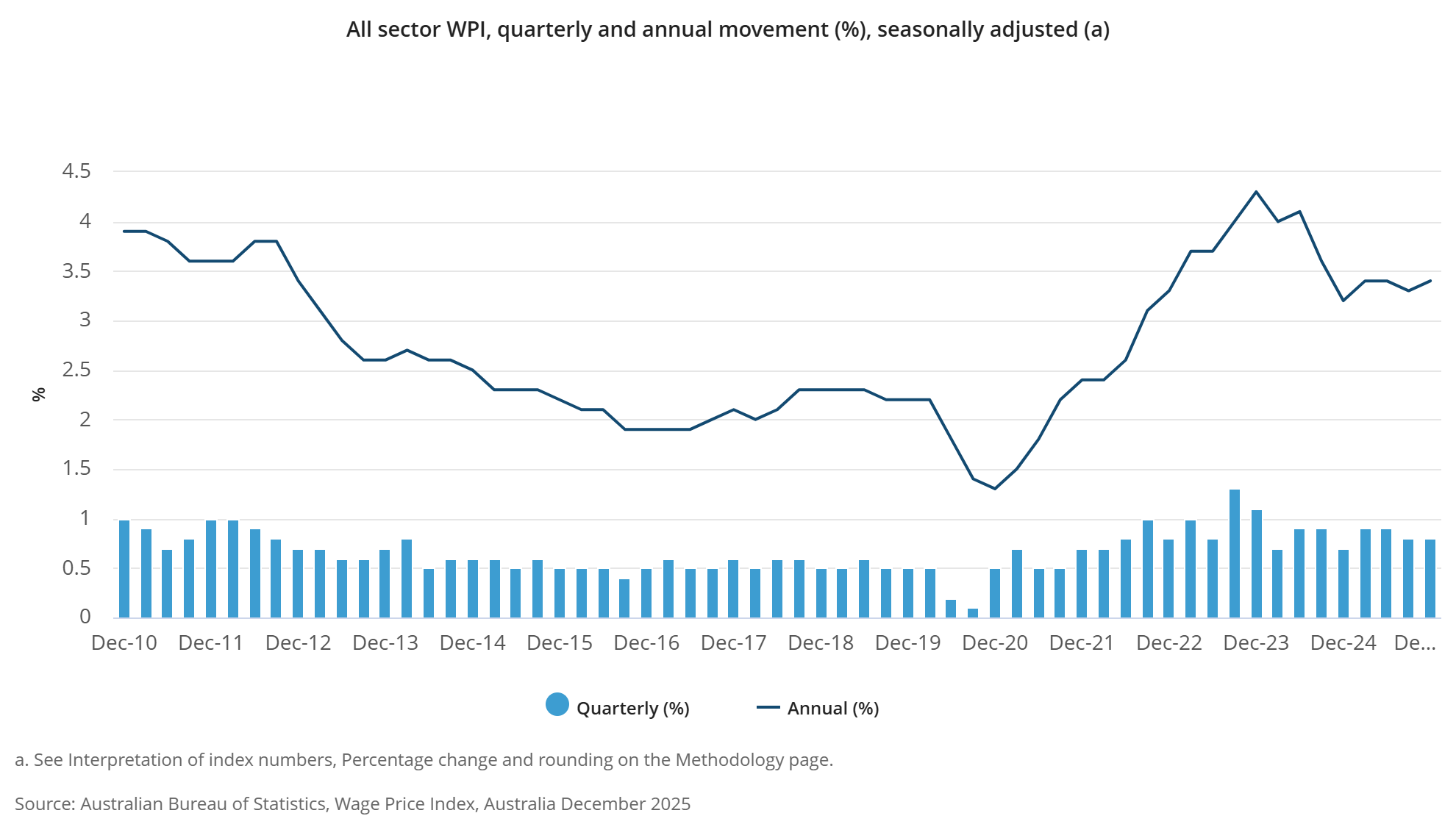
Published by the Australian Bureau of Statistics, the Wage Price Index (WPI) is widely regarded as a reliable indicator of wage growth in Australia. The seasonally adjusted WPI rose 0.8% last quarter, bringing annual wage growth to 3.4% in 2025 (underpinned largely by public sector and health care and social assistance pay increases).
While WPI does not capture bonuses or overtime, the data suggests the labour market has shifted from the shortage-driven wage surge of recent years into a more steady and controlled wage environment. Pay increases are now more selective and, in many industries, are likely to be tied to productivity. That said, this is not an across-the-board statement – where skills shortages persist, demand will continue to influence wages (and the Olympics pipeline is likely to place upward pressure on trades).
However, with inflation currently running at 3.8% annually, real wages actually fell by around 0.4% – the first real wage decline in two years.
For employers, falling real wages can quietly impact morale. The challenge is that employees may receive a pay rise but still feel worse off. They won’t necessarily leave their job but this perception matters, as there is a risk of disengagement.
Following are some practical ways to support value perception, particularly when pay growth is constrained:
Strengthen non-pay employment benefits
- Common examples include flexible start/finish times, hybrid work options, compressed work weeks, leadership development programs, parking and uniforms. More creative initiatives we’ve seen include onsite massages, staff-led social impact projects, lunch-and-learn events, relaxation spaces and flexible work zones (I’ve even heard of treadmill desks, although I’m not sure where Risk & Compliance lands on that one!).
Focus on recognition
- When wage growth tightens, feeling valued matters more than ever. Consistent acknowledgement can make a meaningful difference – from one-on-one praise and simple thank you emails through to social media shout-outs, team meeting announcements and milestone celebrations.
Reward contribution, not just tenure
- Linking incentives to productivity through project bonuses, team-based rewards or skills progression reinforces fairness and can be a great motivator.
Invest in stability
- When households feel financial pressure, certainty becomes more valuable. Predictable hours, reliable rosters, job security and transparent communication about business direction can significantly support morale.
If you’re reviewing your workforce strategy and would like to explore practical ways to support retention and performance without relying solely on wage increases, reach out to our team on 3812 2920 or email recruitment@topoffice.com.au.