
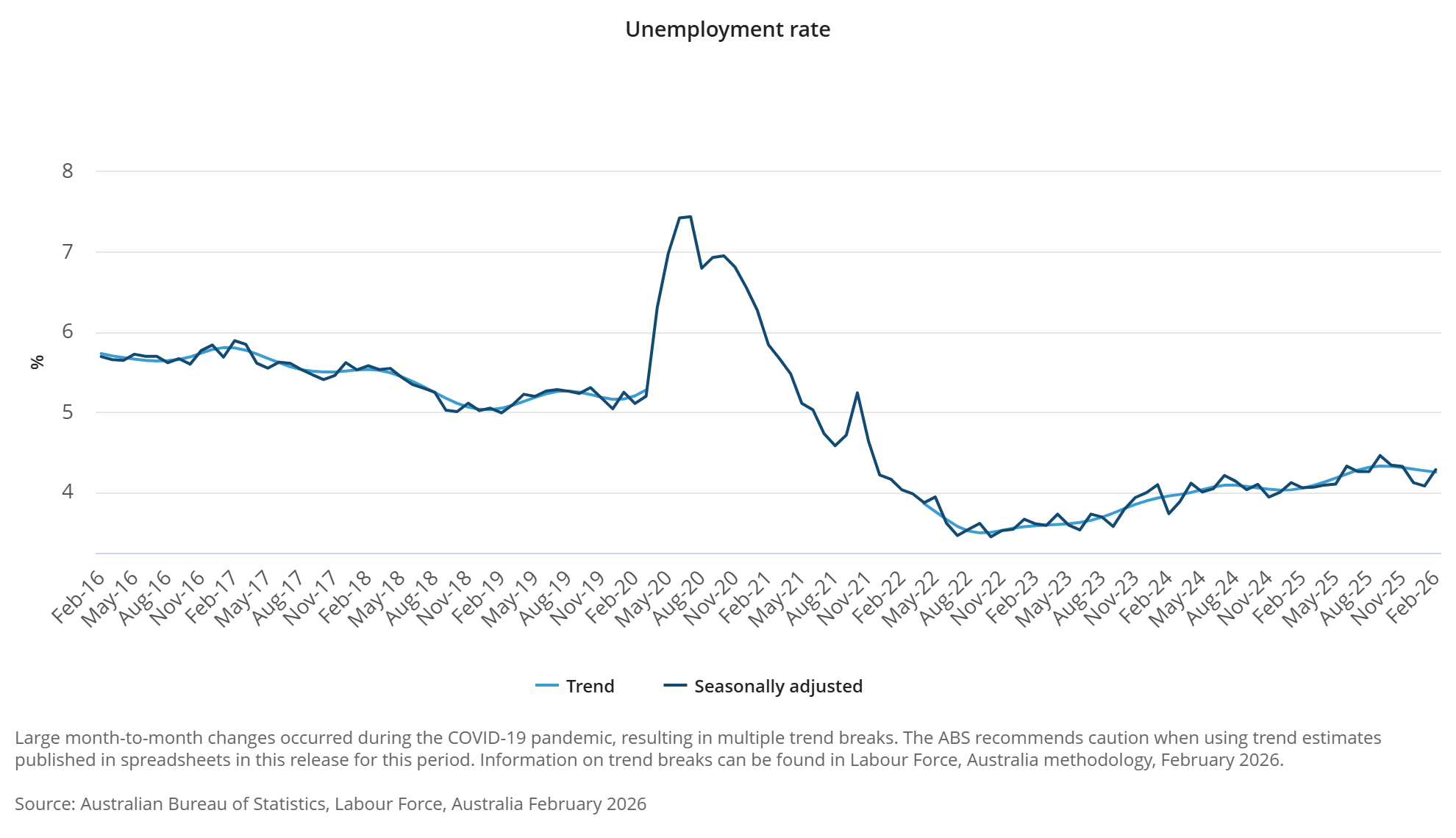
Latest ABS Labour Force seasonally adjusted data shows unemployment edged up to 4.3% in February 2026.
But looking beyond the headline, there are some interesting signals beneath the surface:
- The number of employed people actually increased overall (more than double what was forecast), albeit driven entirely by part-time jobs.
- The participation rate rose to 66.9% – not far off the record high of 67.2% set in January 2025.
- Monthly hours worked hit a new historic record in trend terms (2,009.2 million), with a yearly increase of 31 million hours (and at 2,007.1 million seasonally adjusted, is second only to the record set last month of 2,010.5 million).
So where am I going with this?
There is more to the story than meets the eye. While an increase in unemployment is something to watch, we are still a fair way off the pre-COVID rate of 5.2% in January 2020. The latest Vacancy Report from Jobs and Skills Australia also notes that job advertisements remain around 25% higher than the 2019 monthly average.
My initial takeaways from this data?
- The rise in unemployment appears to be driven by increased participation rather than a downturn in hiring.
- The labour market is easing, but still tight – demand for workers remains reasonably strong.
- Work levels remain historically high – suggesting businesses are still busy and continuing to utilise their workforce heavily.
However, inflationary pressure from fuel supply disruption is unlikely to be reflected in these figures yet. Rising fuel costs don’t just increase expenses – they influence behaviour.
We’ll be watching closely to see how this flows through to hiring activity, workforce decisions and overall labour market conditions in the months ahead.